
Marion Criminal History Checks
Begin with the creator. A Marion officer's narrative stays with the town police channel, while an ordinance case belongs to Marion Municipal Court. A person taken into custody generates a separate Union Parish Detention Center booking. If the district attorney files a state charge, the Union Parish Clerk keeps the Third Judicial District Court record. Each layer answers a different question.
- Contact Marion Town Hall or police and identify the report by date, time, location, parties, and report number when known.
- Ask for the exact product, such as an incident report, arrest report, citation, or municipal court entry.
- Confirm whether the matter belongs to Marion Municipal Court or the separate Ward 2 Justice of the Peace court.
- Call UPDC for present custody and use the Union Parish Clerk for a filed Third JDC case and disposition.
- Use Louisiana State Police BCII when an authorized statewide check or review of your own fingerprint-supported record is required.
This route avoids a common error: treating a town citation, a jail charge, and a district prosecution as interchangeable. They may carry different dates and labels because each custodian records a different stage.
Marion Records Since 1832
The official Marion website traces the town's settlement to 1832 and says its name came from Marion, Alabama, the origin of its first settlers.
That civic history helps explain why town minutes, ordinances, and municipal proceedings form their own local record trail. Marion is one of Union Parish's oldest towns, but old local identity does not place felony records at Town Hall. State prosecutions still move to the Third JDC and its Union Parish clerk. Historical researchers should identify whether they need town legislative material, a local court entry, or a district case before submitting a request.
Records at Marion Police
Marion has no published police report form or online blotter. The official town contact page is therefore the verified starting point for Town Hall and police routing.
A written request should give the requester's name and contact information, the incident or report identifier, date, time, location, a clear description of the desired record, and preferred delivery method. Copy fees and turnaround are not published. Confirm both with the custodian. Ask separately for a report, dispatch entry, video, or crash record because each may be stored and reviewed differently.
Police reports can include alleged facts, officer information, the stated legal basis, and the initial charge. They do not establish guilt. Protected victim data, juvenile information, or active investigative details may be redacted or withheld under Louisiana law.
Marion Police Staffing in Minutes
Town council records can reveal how the local records system is administered. Marion's November 12, 2024 minutes authorized three part-time police hires. Current council materials also identify the police chief. These are policy and staffing records, not arrest logs, yet they give a dated official trail when the town's public-facing police pages provide limited detail.
The distinction is useful. Ask the police custodian for an incident record. Ask Town Hall for council minutes, resolutions, staffing authorizations, or public policy records. A small department can use the same civic contact point for routing, but the requested documents still come from different governmental functions. Describe the existing file instead of asking the town to write an explanation.
Booking and Arrest Records in Marion
No official Marion town jail was found. When a Marion arrest leads to parish custody, the Union Parish Detention Center at 707 Rodeo Circle in Farmerville creates the booking record. Call (318) 368-9827 for current custody, charge, and bond details. The Union Parish Police Jury operates UPDC through a jail commission. The Union Parish Sheriff's Office says it does not operate the jail, even though the sheriff handles Third JDC bond paperwork at 710 Holder Road.
Jail intake can add fingerprints, a photograph, property inventory, a custody number, demographic fields, preliminary charges, bond, and release information. A listed arrest charge is not a conviction. The district attorney may decline or change it. Readers who need the full parish custody chain can use the Union Parish arrest search for the LA VINE, UPDC phone, and sheriff app channels.
Marion Municipal, JP, or Third JDC
January 14, 2025 town minutes expressly reference both Marion Municipal Court and the Ward 2 Justice of the Peace court. The official minutes are the best safeguard against clicking an unrelated Marion court result from another jurisdiction. Those two local channels are also distinct from the Third Judicial District Court.
Use the alleged charge and issuing body to route the search. A Marion ordinance citation points toward the municipal court. A Ward 2 JP matter should be confirmed with that justice's office. A felony or state prosecution goes through the Third JDC, with the Union Parish Clerk holding the court file. If the citation is unclear, give Town Hall its number and date and ask which custodian holds the docket.
Note: A court name match on the open web is not proof that the site covers Marion, Louisiana.
The Marion Municipal Court File
Marion Municipal Court provides a local record route for municipal matters. Louisiana R.S. 33:441 authorizes mayor's-court jurisdiction over municipal ordinance violations. Research found no official online docket portal, so Town Hall is the practical contact for lookup and copies.
| Court Name | Marion Municipal Court |
|---|---|
| Case Types Heard | Municipal ordinance violations and other lawful local matters |
| Case Lookup Channel | Town Hall or court contact; no official online docket found |
| What the Docket Shows | Case or citation identifier, event entries, plea or ruling, and local outcome when recorded |
| Copies & Fees | Request directly; fee and turnaround are not published |
A municipal docket does not contain the Union Parish jail's intake details or the clerk's felony case. If an ordinance matter developed into a state charge, check both the town file and the district case.
Marion's New Access Policy
On February 12, 2025, Marion adopted a new Public Meetings Policy and introduced an ordinance about council dates. That action creates a current transparency trail in town minutes. It also shows why meeting packets and minutes can matter when looking for policy changes that affect how local offices work, even though those documents are not criminal histories.
The Louisiana Public Records Law supplies the broader access framework for existing nonexempt town records.
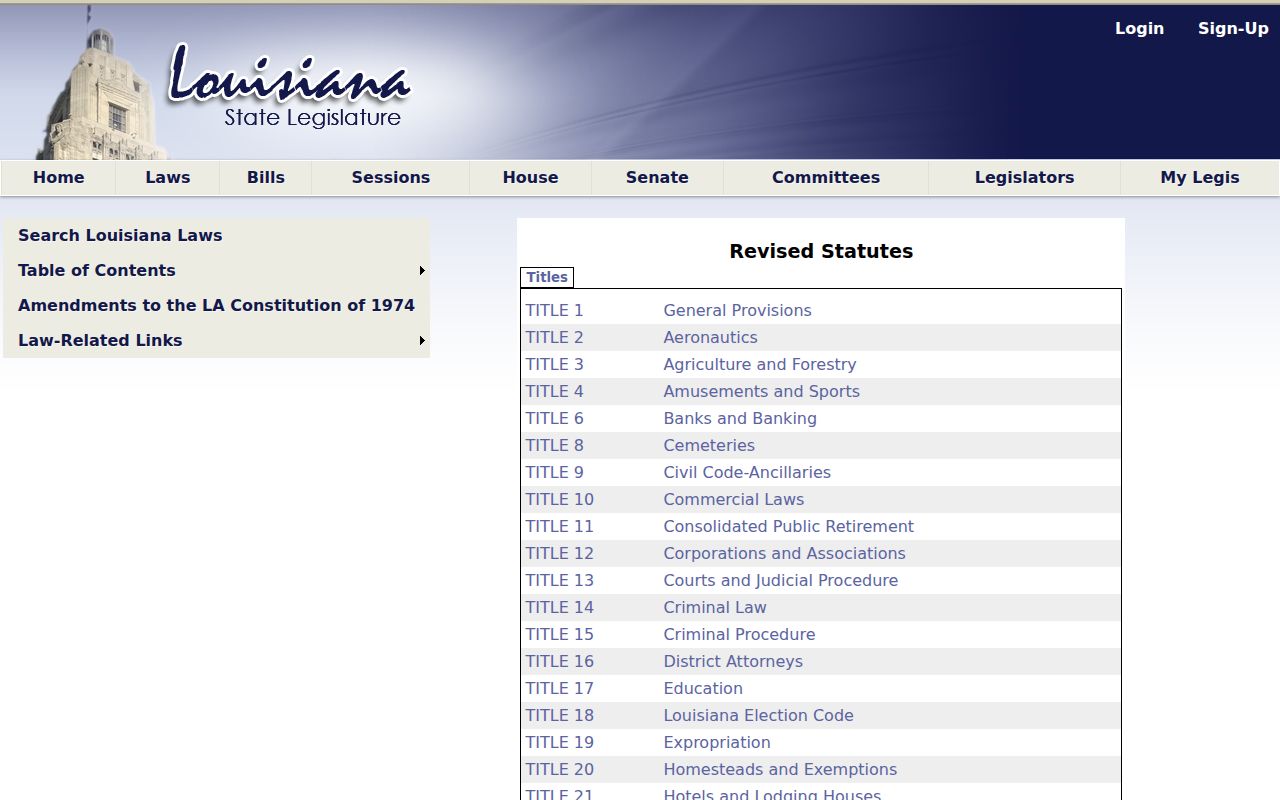
A records policy can guide submission and inspection, but it cannot turn exempt information into a public file. Requesters should follow the current town procedure and ask the custodian to cite the legal basis for any denial or redaction.
How Marion Records Reach the County
The local report begins with Marion Police. Custody intake occurs at UPDC when an arrest leads to detention. The Third Judicial District Attorney chooses what state charge, if any, to prosecute. The Union Parish Clerk holds the filed pleadings, minutes, notices, bench warrants, evidence records, disposition, and sentence. Criminal minute clerks verify minutes before public release, which can create a short delay after court.
Record flow: Marion Police › Union Parish Detention Center › Third JDC › Union Parish Clerk › Louisiana State Police BCII
Fingerprint-supported qualifying events and reported outcomes may reach BCII's state criminal-history system. Louisiana does not offer an unrestricted public name-only LACCH search. R.S. 15:587 limits dissemination to authorized routes, while State Police provides a process for a person to review their own record. A clerk disposition and a BCII record should be compared when an outcome appears missing.
Criminal Records in Marion's 601
The Census Bureau estimated Marion at 601 residents in 2024, down from 623 in 2020. Small scale explains why direct contact and town minutes play such a large role. It does not justify assuming that a missing web portal means missing records. Call or write the actual custodian.
Small-town crime rates also need care. A few incidents can cause a large percentage swing. Official FBI data should be shown with the agency, year, event count, and population base. A blank reporting year is not zero crime. Aggregate crime figures cannot confirm any individual's Marion criminal record, arrest, or disposition.
Federal Cases Outside Marion
Town and parish searches do not disclose every federal prosecution. Union Parish lies in the Western District of Louisiana, and federal electronic case records use PACER. The PACER Case Locator can locate matters across participating federal courts after registration.
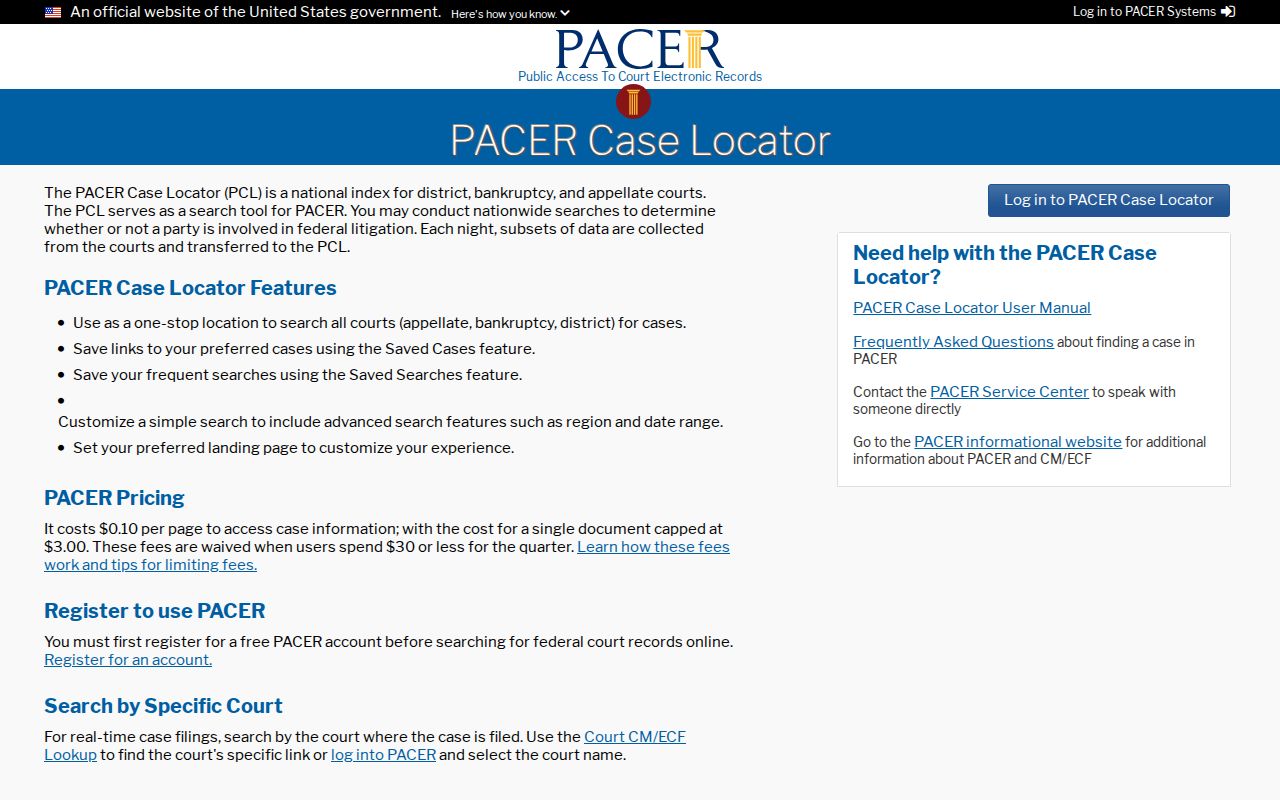
PACER usage fees and its quarterly waiver threshold can change, so consult the current official schedule and date any fee quoted. Courthouse terminals and published opinions offer other routes. A federal result remains separate from Marion Municipal Court, Ward 2 JP, and Third JDC records. Search the system with jurisdiction over the case instead of expecting one Marion lookup to combine them.
No Marion Docket Portal
No official Marion docket portal, police form, or blotter was located. Use the verified Town Hall contact rather than an unofficial database. For a report request, state the incident date, time, location, report number, parties, record type, and delivery method. For a court request, add the citation or case identifier and the court named on the paper.
If Marion has no matching entry, test the next likely layer. A recent event may not yet have reached court. An arrest may be recorded at UPDC. A state charge may be filed with the Union Parish Clerk. An ordinance case may remain local. This fallback chain is more reliable than treating silence in one office as proof that nothing happened.
Marion Record Access Rules
Louisiana law generally allows inspection or copying of existing nonexempt public records held by the proper custodian. Marion can redact or withhold material protected by a specific exemption, including some active investigative, juvenile, and victim information. The town need not create a new report or answer an open-ended research question. A narrow request for an identifiable file is easier to process.
Key Statutes:
Louisiana Public Records Law - Existing nonexempt public records are generally available from their lawful custodian.
La. R.S. 15:587 - BCII criminal-history information is disseminated through authorized recipients and processes.
La. R.S. 33:441 - A mayor's court may exercise jurisdiction over municipal ordinance violations.
Ask for a written explanation when access is denied. A redacted Marion copy can still confirm nonprotected facts, dates, and the existence of a proceeding without exposing information the law shields.
Town Council Records as Fallback
When a question concerns police staffing, public policy, an ordinance, or municipal administration, the town council record is often the right source. The official nearby town council record example also illustrates why municipal sources must be matched to the correct town.
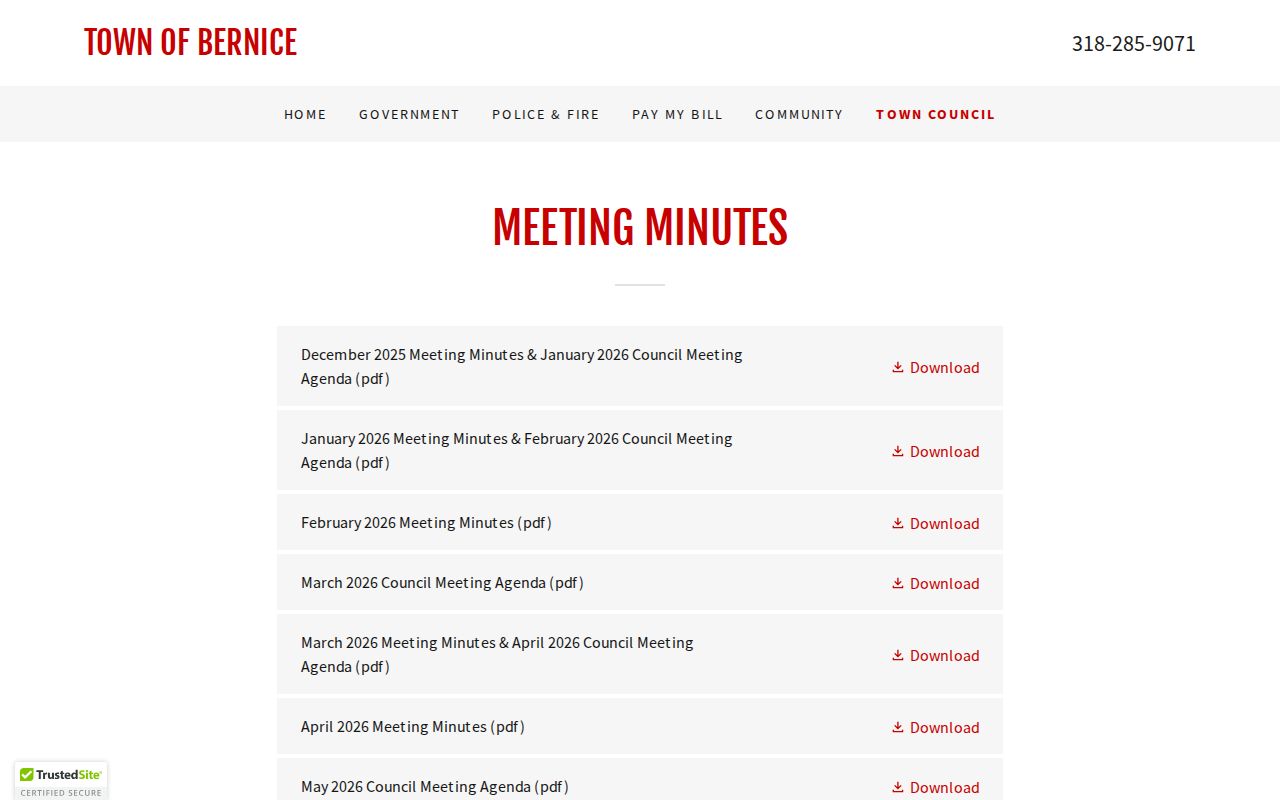
That image is assigned to this page's manifest but depicts Bernice, not Marion. It is included transparently as a routing caution. For Marion facts, rely on Marion's own council minutes and Town Hall. Municipal records from one Union Parish town never prove the policy, staffing, or court action of another.